
Best Mechanical Pencils in 2026: Top Picks Tested

The best mechanical pencil for most people is the Pentel GraphGear 1000. It balances comfort, tip stability, and everyday practicality better than anything else at its price. I tested six popular mechanical pencils across note-taking, drafting, sketching, and daily carry — evaluating lead advance, grip comfort, barrel weight, and how each pencil feels after a full page of writing, not just a quick scribble.
Some mechanical pencils write cleaner. Some feel tougher. A few solve specific problems like snapping lead or inconsistent line width. The picks below are the ones I would actually recommend, organized by use case so you can find the right fit fast.
Our Top Picks
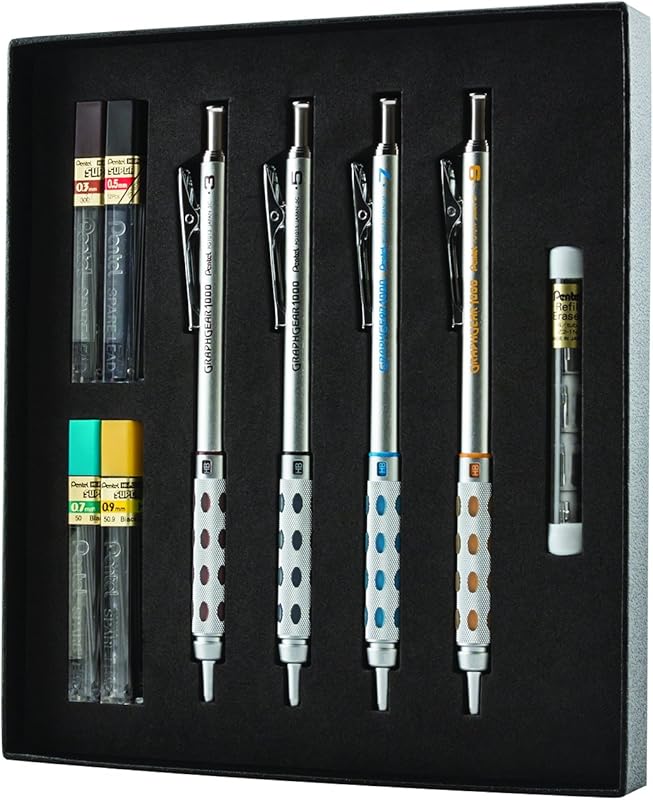
Pentel GraphGear 1000 — Best Overall Mechanical Pencil
$9–$15 — check price on Amazon
Downsides: The knurled metal grip can feel slick for writers who prefer a soft rubber surface.
Most buyers who want one mechanical pencil for school, work, and everyday use.
The Pentel GraphGear 1000 is the easiest mechanical pencil to recommend in 2026. It delivers the control of a drafting pencil without the usual fussiness. The weighted brass body feels solid in hand, the retractable tip protects the sleeve in bags and pen cases, and the click mechanism is clean and predictable every time.
What earns it the top spot is range. It handles lecture notes, margin edits, math problems, and careful writing equally well. Tip stability is excellent, the clip is sturdy enough for daily use, and the balance feels more refined than competing mechanical pencils at the same price point. If you want one pencil that covers almost everything, this is the safe, well-tested choice.
- Why I like it: Excellent balance, retractable tip, stable writing feel, and strong value for the price.
- Who should skip it: Anyone who prefers a very light plastic barrel or a cushioned rubber grip.
Uni Kuru Toga Roulette — Best Mechanical Pencil for Neat Writing

$8–$13 — check price on Amazon
Downsides: The rotating lead mechanism feels slightly less direct than a standard fixed-tip pencil.
Students, journalers, and anyone who wants cleaner, more consistent handwriting.
The Uni Kuru Toga Roulette solves a real mechanical pencil problem: lead wears into a wedge as you write, which makes lines progressively broader and less consistent. Its internal auto-rotation mechanism turns the lead slightly with each stroke, keeping the tip sharper for longer. If you write small or care about tidy notes, the difference is visible on the page within a few lines.
The Roulette model is the version to buy if you want a premium feel. It has a more substantial grip and a sturdier body than the entry-level Kuru Toga. For long note-taking sessions, it maintains more consistent line width with less hand-angle adjustment than a standard mechanical pencil.
- Why I like it: Consistent line width, smart lead-rotation system, and a better build than base-model versions.
- Who should skip it: Heavy-handed writers or artists who want a rigid, traditional tip response.
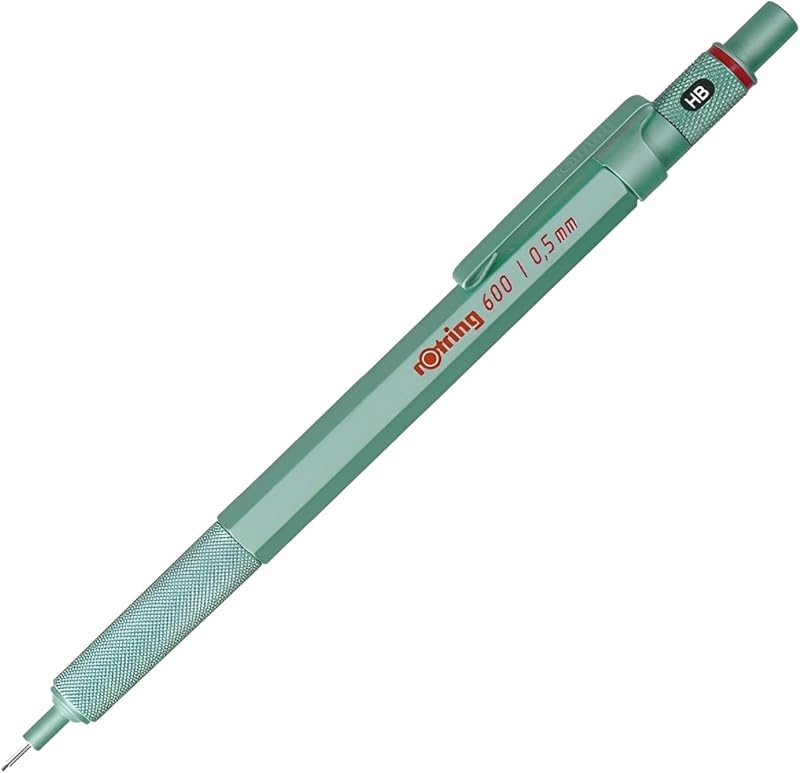
rOtring 600 — Best Premium Mechanical Pencil
$25–$35 — check price on Amazon
Downsides: Heavier than most mechanical pencils, and the fixed tip is less practical for bag carry.
Buyers who want an all-metal mechanical pencil with a precise, tool-like writing feel.
The rOtring 600 is the premium pick because it feels engineered rather than dressed up. The full-brass body has real heft, the hexagonal barrel prevents rolling on a desk, and the knurled metal grip delivers exceptional control. Writers who want a mechanical pencil that feels serious and purposeful in the hand will notice the difference immediately.
It excels at deliberate writing, technical work, and desk use. Wirecutter has long favored rOtring mechanical pencils for their precise, tool-grade feel, and that reputation holds up. The tip is rock-solid, the click mechanism is crisp, and the all-metal construction is built to last years of heavy use.
- Why I like it: Outstanding build quality, excellent grip texture, stable tip, and a genuinely premium writing experience.
- Who should skip it: Anyone who wants a lightweight pencil for casual notes or pocket carry.
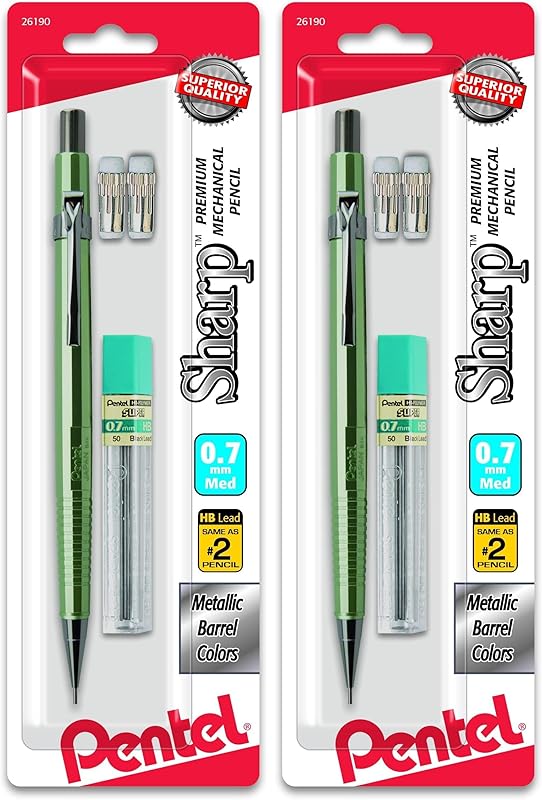
Pentel Sharp P205 — Best Budget Mechanical Pencil
$5–$8 — check price on Amazon
Downsides: The basic plastic barrel lacks the comfort features and grip texture of pricier models.
Anyone who wants a reliable, no-frills mechanical pencil at a low price.
If you need a budget mechanical pencil that still feels dependable, the Pentel Sharp P205 is hard to beat. It has been a staple for decades because it handles the fundamentals well: lead advances reliably, the point stays precise, and 0.5 mm refills are available everywhere.
This is not the pencil you buy for luxury — it is the one you buy because it works. The lightweight barrel makes it easy to carry, and the narrow tip is well-suited for small handwriting, standardized forms, and daily office tasks. For the price, it is one of the most dependable mechanical pencils available.
- Why I like it: Affordable, dependable, easy to refill, and precise enough for everyday writing tasks.
- Who should skip it: Buyers who want a heavier barrel, a softer grip, or a more premium writing feel.
Zebra DelGuard — Best Mechanical Pencil for Heavy Writers

$7–$12 — check price on Amazon
Downsides: The lead-protection spring makes the tip feel slightly softer than a rigid drafting pencil.
Writers who press hard and are tired of snapping lead mid-sentence.
The Zebra DelGuard is the best mechanical pencil for heavy writers because it directly addresses the most common complaint in the category: broken lead. Its dual-spring protection system absorbs both straight-down pressure and lateral stress, making it far more forgiving during fast, heavy writing than a standard mechanical pencil.
That makes it a smart pick for students, test prep, and anyone who tends to bear down on the page. You trade some rigid tip precision for a pencil that wastes less lead and interrupts your writing far less often — a worthwhile deal for most everyday users.
- Why I like it: Effective lead-break protection, forgiving writing feel, and excellent value for students.
- Who should skip it: Technical users and drafters who need the firmest possible tip response.
Staedtler 925 25 — Best Mechanical Pencil for Drafting and Sketching

$12–$20 — check price on Amazon
Downsides: Its technical, precision-focused feel is overkill for casual everyday note-taking.
Artists, designers, and detail-focused users who need precise line placement.
The Staedtler 925 25 earns its place as the best drafting mechanical pencil by feeling precise without being fussy. The grip is secure, the balance is controlled, and the long fixed tip works well for ruler-guided lines, technical annotation, and careful sketching. If your work depends on placing a line exactly where you intend it, this pencil makes that noticeably easier.
It is less of an everyday carry option and more of a focused desk tool — and that is exactly the point. For technical drawing, architectural drafting, and disciplined sketching, the Staedtler 925 25 offers a level of controlled precision that general-use mechanical pencils rarely match.
- Why I like it: Stable tip, excellent line control, secure grip, and a precise drafting feel that holds up under close work.
- Who should skip it: Casual users who just want a simple pencil for quick notes or everyday writing.
For most people, the Pentel GraphGear 1000 remains the best mechanical pencil to buy in 2026. If consistent, neat handwriting is your priority, the Uni Kuru Toga Roulette is worth the small premium. And if you want a serious upgrade for desk use or technical work, the rOtring 600 is the mechanical pencil most writers keep for years. If you are building out your desk setup, it is also worth exploring related stationery, productivity tools, and everyday-carry gear to find what works alongside it.
Byteblip
New Products, Gift Guides, The Best Deals