The 9 Best Exercise Bikes of 2026, Tested and Reviewed
From Peloton's polished ecosystem to budget-friendly options under $300, we break down the best exercise bikes for every type of rider in 2026.
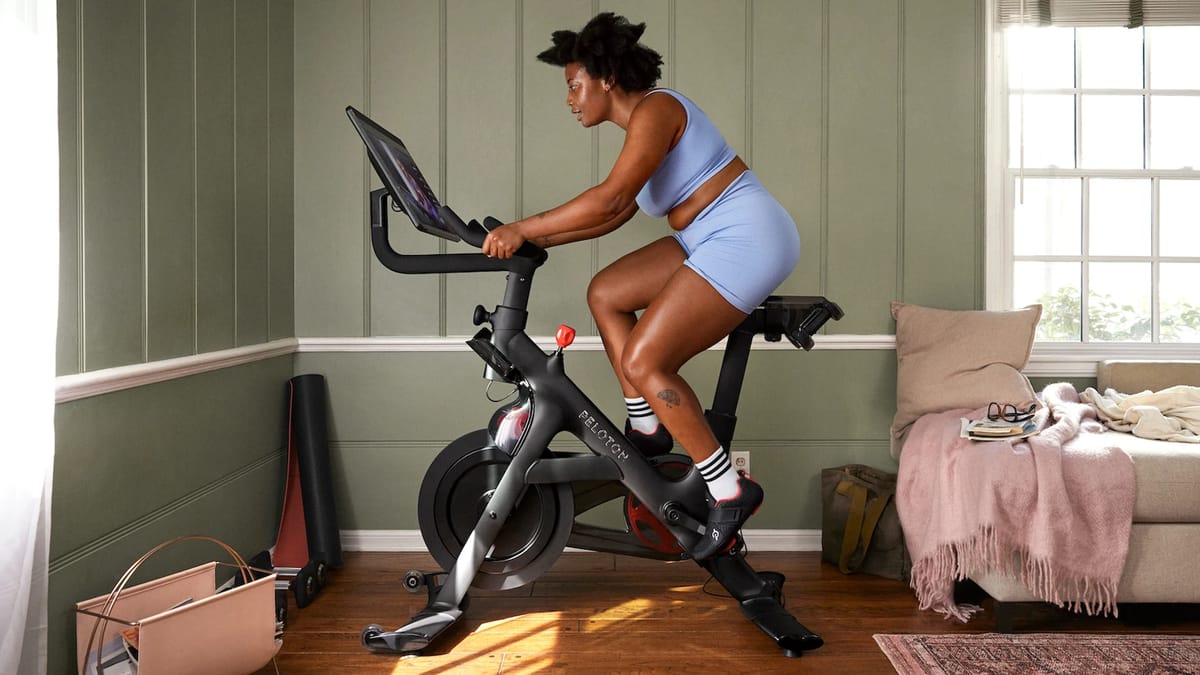
There's a version of you that exercises before work. Wakes up, hops on the bike, sweats through a 30-minute ride, showers, and starts the day feeling like a functional human being. That version of you is completely achievable — if you have the right equipment at home. The gym is great until it isn't: until the commute kills the motivation, or the guy next to you hasn't discovered deodorant yet, or it's raining sideways outside and your couch is right there. A home exercise bike solves all of this. It's just you, your music (or your Peloton instructor yelling encouragement), and no excuses.
But the exercise bike market is genuinely confusing right now. You've got sleek connected bikes with giant touchscreens that stream live classes from New York City studios, you've got dead-simple spin bikes that cost less than your last dinner out, you've got bikes that lean into corners, bikes that incline, bikes with built-in fans, and a handful of air-resistance monsters that will ruin you in the best way possible. The price range is almost absurd — from $300 to $3,000 — and the right answer depends a lot on who you are, what you'll actually use, and how much money you're willing to spend on something that might become an expensive laundry rack.
We researched and tested across a huge swath of the market — consulting data from Garage Gym Reviews, OutdoorGearLab, Cycling Weekly, and Runner's World, plus hands-on reviews from fitness experts — to find the best exercise bikes you can buy in 2026. Whether you're chasing a Peloton-caliber experience without the Peloton price tag, looking for something to stash in a small apartment, or just want the toughest air bike you can put in your garage, there's something on this list for you.
Our Top Picks
Peloton Bike+ — Best Overall
Yes, it's expensive. Yes, it requires a monthly All-Access membership ($44/month) to unlock everything that makes it worth buying. And yes, you've heard of it. But there's a reason the Peloton Bike+ keeps landing at the top of these lists: it is, quite simply, the best complete experience in home cycling. The 23.8-inch rotating HD touchscreen, the Sonos-tuned speakers, the auto-follow resistance that adjusts to match your instructor's callouts — it all just works, seamlessly, in a way that makes a 45-minute ride feel like you actually want to be there.
The Bike+ has 100 levels of silent magnetic resistance and a 170mm Q-factor that gives it a road bike feel. The screen swivels 360 degrees, which means you can dismount and use it for strength training, yoga, or stretching after your ride. The instructor roster is enormous and genuinely entertaining — there's someone for every vibe, from "high-energy party ride" to "meditative 20-minute recovery spin." Assembly and delivery to your room of choice are included in the price.
Downsides: The subscription is non-negotiable if you want the experience that justifies the sticker price. Without it, you've got a very expensive spin bike with a screen. There's also a $95 activation fee if you buy a used Peloton — something to know if you're hunting a deal. And while the five-year frame warranty is excellent, the 12-month component warranty feels thin for a $2,695 machine.
Anyone who wants the full ecosystem — live classes, community leaderboards, thousands of on-demand workouts — and is willing to pay for it. This is the iPhone of exercise bikes.
Schwinn IC4 — Best Under $1,000
If Peloton is the iPhone, the Schwinn IC4 is the Android phone that does 90% of the same stuff for half the money. The IC4 is quietly one of the best value plays in the whole exercise bike space: it has 100 levels of magnetic resistance (same as Peloton), it syncs via Bluetooth with Peloton's app, Zwift, and JRNY, and it comes with a heart rate armband, 3-pound hand weights, and dual SPD/cage pedals — all included.
No built-in screen here; you'll prop your phone or tablet in the holder and stream whatever app you want to ride with. That's actually a feature if you're someone who wants flexibility: one month you're taking Peloton classes, the next you're doing scenic rides on Zwift, the month after you've discovered some other platform you love. You're not locked into anything. The 10-year frame warranty is class-leading.
Downsides: The power and speed readings can run slightly high compared to what Peloton or Zwift calculate, which means your numbers might not be perfectly accurate on third-party apps. It's not a dealbreaker, but perfectionists should know. Also no built-in display or screen — you need a device.
Peloton-curious riders who don't want to commit to the Peloton ecosystem, or anyone who just wants a bulletproof, versatile spin bike under $1,000 that plays nicely with every major app.
NordicTrack Commercial S22i — Best for Incline Training
Most exercise bikes go forward. The NordicTrack S22i also goes up — and down. Its headline feature is a genuine -10% to +20% incline/decline range, which physically angles the bike to simulate climbing hills and descending them. Paired with iFIT's library of on-location rides through mountain trails and coastal roads (where the app automatically adjusts your incline to match the terrain), it creates an immersive experience that no flat spin bike can replicate.
The 22-inch HD touchscreen tilts and pivots, the AutoBreeze fan cranks up as you pedal harder, and the silent magnetic resistance keeps things quiet enough for an apartment. It'll support up to 350 pounds and comes with a solid 10-year frame warranty. The S22i is the machine to buy if you're serious about training variety and want more than just spinning in place.
Downsides: The iFIT subscription runs $39/month ($396/year), and without it, you're not getting the full value. Also, this is a big, heavy bike — 205 pounds — and once it's in your home, it's basically staying there. Setup and moving it around are both challenging. Some users have reported quality control issues and frustrating customer service experiences.
Riders who want incline training, scenic virtual rides, and a feature-rich experience just slightly more affordable than the Peloton Bike+. Outdoor cyclists who train indoors will especially love the terrain-matching rides.
Aviron Fit Bike — Best for Fun and Gamification
The Aviron Fit Bike takes an approach to motivation that nobody else is really doing: gamified workouts. Alongside its library of 1,000+ on-demand classes, there are actual games built into the platform — competitive challenges, interactive races, a "Pros vs. Joes" feature — that make you forget you're exercising because you're too busy trying to win. It's a legitimately clever solution to the problem of motivation, and it works.
The hardware is serious too: 160 levels of electromagnetic resistance (touchscreen-adjustable, no knob fumbling), a rotating 22-inch HD screen, and a freewheel mechanism that mimics riding an actual bike. The 350-pound weight capacity and 20-year warranty signal a machine built to last. Streaming apps — Netflix, Hulu, Disney+, Prime Video, and more — are baked right in. And at $29/month for an unlimited-profiles family membership, the subscription is noticeably cheaper than Peloton's $44.
Downsides: The Aviron doesn't have Peloton's instructor star power or live class energy. If community leaderboard competition is what gets you going, Peloton still wins on that front. The bike is also on the heavier end at 139 pounds, so don't expect to move it often.
Riders who find traditional cycling classes boring or repetitive, competitive types who need a gaming angle to stay engaged, and families who want unlimited profiles without paying Peloton prices.
Bowflex VeloCore 22 — Best for Core Engagement
Here's a bike that does something genuinely unique: it leans. The VeloCore's leaning mode lets the bike rock side-to-side as you ride, which activates your core in a way that a stationary bike simply cannot replicate. It's not gimmicky — the lateral movement meaningfully changes the workout and makes sustained sessions more dynamic and engaging. You can also lock it upright if you just want a traditional ride.
The 22-inch touchscreen runs the JRNY app, which is worth mentioning for its price: $19.99/month or $149/year — roughly half what you'd pay for iFIT or Peloton. JRNY also lets you stream Netflix and Amazon Prime Video directly on the screen. The 100 micro-levels of magnetic resistance and 325-pound capacity round out a genuinely impressive spec sheet.
Downsides: The JRNY app, while affordable, is widely acknowledged to be behind Peloton and iFIT in terms of content depth and instructor quality. The two-year frame warranty is short for a $2,199 bike. Assembly is involved and can be frustrating.
Riders who want something that stands out from every other connected bike and are willing to trade a bit of content library depth for the genuinely unique lean feature. Great for anyone with core training as a priority.
Concept2 BikeErg — Best for Serious Athletes
Concept2 makes the rower that's been a fixture in CrossFit boxes for decades. The BikeErg is built to the same standard: bomber construction, obsessive attention to quality, and zero dependence on apps, subscriptions, or screens. The PM5 performance monitor tracks all your metrics and stores workout history, and the air resistance system means the harder you push, the more resistance you get — there's no ceiling.
At just 68 pounds, it's one of the lightest serious exercise bikes on the market, and interchangeable standard parts mean you can swap the seat, handlebars, and pedals for whatever you prefer. The BikeErg is used in professional training facilities and competitive fitness. As Garage Gym Reviews put it: "nobody is creating conditioning equipment with the attention to detail, quality, or performance of Concept2."
Downsides: Air resistance generates noise — this is not a quiet bike. Apartment dwellers and early-morning riders with sleeping family members should consider a magnetic alternative. There's no forward/back seat adjustment, and the seat can be uncomfortable for some riders right out of the box.
Athletes who train seriously, CrossFitters, cyclists who use it for off-season conditioning, and anyone who hates subscriptions and wants a machine that'll outlast everything else in the house.
Echelon Connect EX-5 — Best Smart Bike Under $1,500
Echelon carved out a solid niche as the "not-quite-Peloton" alternative, and the EX-5 is its strongest offering. The 21.5-inch flip screen (rotates for off-bike workouts), 32 levels of magnetic resistance, and competition-level geometry make it a genuine contender. The Echelon app is solid — live and on-demand classes, scenic rides, and a growing library of strength and yoga content.
Where Echelon really shines is pricing flexibility. The base bike often dips below $1,000 during sales, and the membership runs $34.99/month — cheaper than Peloton. The 170mm Q-factor matches road bikes, and the adjustable seat and handlebars accommodate a wide range of rider sizes.
Downsides: Build quality doesn't quite match Peloton or NordicTrack — some users report squeaking or minor wobble after extended use. The resistance tops out at 32 levels (vs. 100 on Peloton), which stronger riders may outgrow. Customer service reputation is mixed.
Riders who want a connected bike experience with a screen, live classes, and community features at a significantly lower price point than Peloton.
Yosuda Indoor Cycling Bike — Best Budget Bike
If your budget is under $300, the Yosuda is the answer. It's the best-selling exercise bike on Amazon for a reason: it works, it's quiet, it's surprisingly sturdy for the price, and it doesn't pretend to be something it's not. There's no screen, no app, no subscription — just a solid friction-resistance flywheel bike with an LCD monitor that tracks speed, distance, time, and calories.
The 35-pound flywheel provides smooth, quiet resistance. The seat is adjustable four ways, the handlebars move up and down, and the whole thing fits in a remarkably small footprint. At 270 pounds max weight capacity, it can handle most riders. Tens of thousands of positive reviews back up the value proposition.
Downsides: Friction resistance wears over time (you'll need to replace the brake pad eventually). No Bluetooth connectivity means no syncing with apps. The LCD monitor is basic. And the seat — let's be honest — could use an upgrade. Budget for a gel cover.
First-time buyers, anyone on a tight budget, or riders who just want to pedal without screens, subscriptions, or complexity. Hard to beat for under $300.
Schwinn 290 Recumbent — Best Recumbent Bike
Not everyone wants a spin bike. If you have back issues, knee problems, or just prefer a more comfortable seated position, a recumbent bike is the way to go — and the Schwinn 290 is the best one available. The step-through design makes getting on and off easy, the ventilated seat with lumbar support is genuinely comfortable for long sessions, and the 25 resistance levels provide plenty of range.
Bluetooth connectivity lets you sync with Peloton, Zwift, and the Explore the World app. The 7-inch LCD display is large and readable, and the built-in speakers, USB charging port, and media shelf round out a thoughtful feature set. The 300-pound weight limit and Schwinn's proven reliability make it easy to recommend.
Downsides: Recumbent bikes inherently provide a less intense workout than upright or spin bikes. The 290 is also large and heavy — plan where it's going before you build it, because it's staying there. No touchscreen or streaming capability.
Older adults, riders recovering from injuries, anyone with back or joint issues, or people who simply want a comfortable daily ride without straining their body.
Byteblip
New Products, Gift Guides, The Best Deals