Best Dehumidifier (2026): 5 Picks for Damp Basements
Five dehumidifiers that actually fix damp basements - plus what size to buy, when you need a pump, and how to set humidity.
If you are shopping for the best dehumidifier, you are probably past the point of politely ignoring the problem. Maybe your basement smells like a wet dog. Maybe your bathroom mirror takes an hour to clear. Maybe you found that fuzzy little patch behind a dresser and immediately decided you are now a “dehumidifier person.” Same.
The good news: modern 50-pint dehumidifiers are genuinely effective, and you can buy one that basically runs itself - emptying is optional if you set up a hose or a built-in pump. The bad news: a lot of them look the same, the model numbers are nonsense, and the difference between “quiet enough” and “my house is now a compressor museum” is real.
Below are my favorite picks for 2026, with a focus on the models people actually buy for basements, garages, and muggy apartments. I will also show you how to pick the right size, when you want a dehumidifier with pump, and what to do if you just need something for a small room.
Our Top Picks
Midea Cube 50-Pint Dehumidifier with Pump (MAD50PS1QWT)
Downsides: The “cube” shape is love-it-or-hate-it, and it takes up more floor footprint than skinny tower units.
Most people who want a set-it-and-forget-it basement dehumidifier with fewer bucket trips, plus the flexibility of a built-in pump.
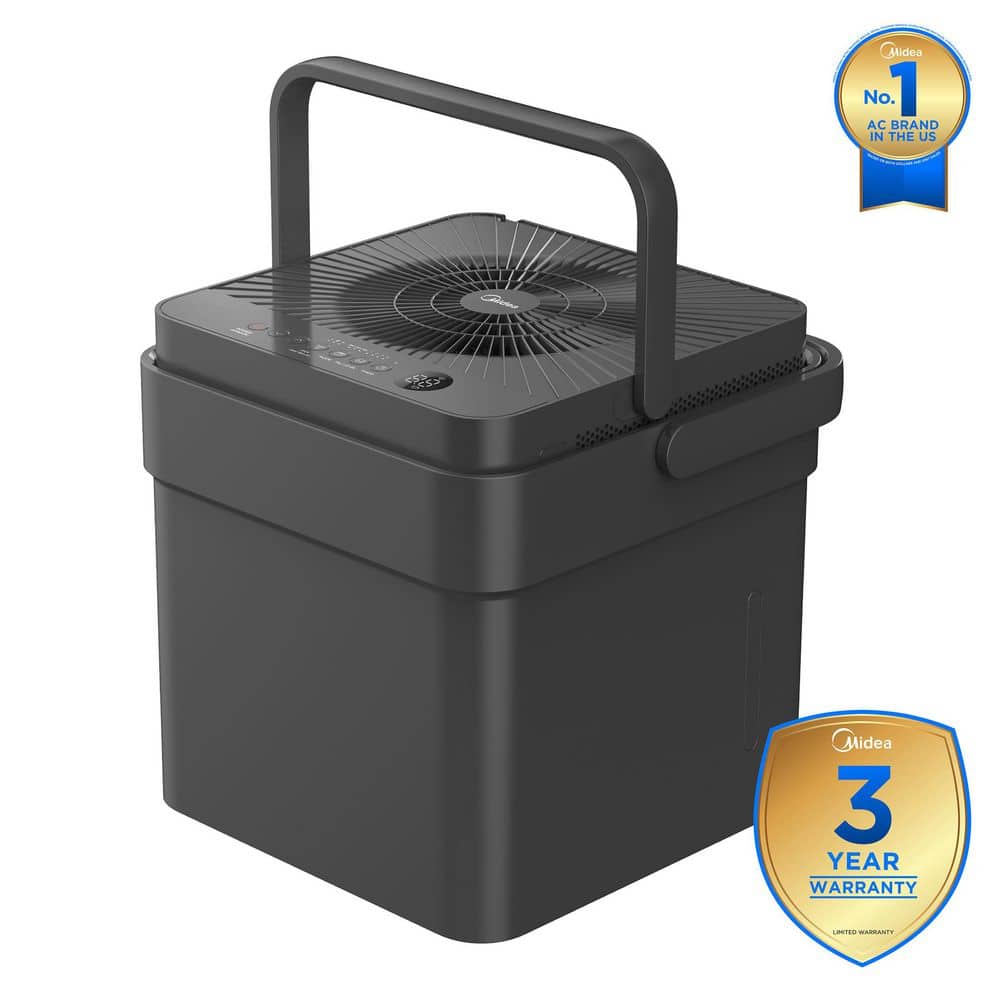
The Midea Cube is the dehumidifier I recommend when someone says, “I do not want to think about humidity ever again.” It is a 50-pint unit (the sweet spot for basements) with a big integrated tank and a built-in pump, which means you can run a hose to a sink or window and skip the daily bucket routine. Midea markets it for spaces up to 4,500 sq ft, with Wi-Fi control and a built-in pump as core features (Midea).
What makes the Cube different is not just the pump - it is the practical “big tank, fewer interruptions” vibe. If you have ever woken up to a full bucket alarm, you understand why this matters. The Cube design stores more water than typical upright units, so it can keep running longer between empties. It is also widely sold at big retailers (Home Depot, Lowe’s, Amazon), which usually means replacement parts and warranty handling are less of a headache.
Who should skip it? If you are tight on floor space or you want something that disappears into a corner, the Cube is not subtle. But if you want performance and convenience, it is hard to beat.
Frigidaire 50-Pint Wi-Fi Dehumidifier (FHDD5034W1)
Downsides: Tank-emptying is still a thing unless you set up continuous drainage; app features are “fine,” not magical.
People who want a classic-looking 50-pint unit from a household-name brand, with Wi-Fi controls and strong moisture removal.
Frigidaire is the boring, dependable friend of home comfort gear. The FHDD5034W1 is a 50-pint model with Wi-Fi, and it is designed to run down to 41 F and shut off automatically when the bucket is full (Frigidaire). That low-temp capability is a bigger deal than it sounds if your basement is chilly in spring and fall, because many compressor units get cranky when temperatures drop.
If you want to avoid emptying, pair it with continuous drainage. I like this unit for “normal” basements where you want a straightforward control panel, good mobility, and predictable performance. It is also easy to find at big retailers like Walmart, which lists it as a 50-pint Wi-Fi Energy Star unit for up to 4,500 sq ft (Walmart).
hOmeLabs 50-Pint Dehumidifier (HME1003)
Downsides: The tank is smaller than some competitors, so expect more frequent empties if you do not use a hose.
Big, damp spaces where you want strong moisture removal and solid value, and you plan to use continuous drainage.
The hOmeLabs HME1003 is a popular “big coverage” pick - it is commonly marketed for very large areas and tends to be priced competitively. Independent testing sites like Dehumidifier Buyers Guide rate it as one of the better high-capacity units and note that it performed well in moisture removal tests, with standard humidity settings (35% to 85%) and typical compressor-style features (Dehumidifier Buyers Guide).
My take: it is a good buy when you want a lot of dehumidifier for the money and you are not obsessed with premium fit-and-finish. I would treat it like a basement appliance - roll it into place, connect a hose, and let it do its thing.
GE 50-Pint Dehumidifier with Built-in Pump (APHL50LB)
Downsides: Can be noisier than average; you pay extra for the pump convenience.
Basements where gravity drainage is awkward and you specifically need a built-in pump from a major appliance brand.
Sometimes you need a pump because there is no easy floor drain, and you do not want to run a hose down a staircase like you are setting up a moonshine still. The GE APHL50LB includes a built-in pump and is sold as a “wet spaces” dehumidifier, with published dimensions right on GE’s product page (GE Appliances).
In hands-on testing, Dehumidifier Buyers Guide highlights that the APHL50LB comes with a built-in pump and even includes a 16 ft pump drain hose, but it also measured higher noise output than average (Dehumidifier Buyers Guide). That lines up with the general tradeoff: pumps are convenient, but the overall unit is not always the quietest in its class.
Toshiba 50-Pint Dehumidifier (TDDP5014RES2)
Downsides: No built-in pump; if you need to drain upward, look elsewhere.
People who want a strong, efficient 50-pint dehumidifier and are fine using gravity drainage or bucket emptying.
If you are trying to balance performance and energy use, Toshiba’s TDDP5014RES2 is worth a look. Dehumidifier Buyers Guide measured relatively low power draw in its testing and notes the unit does not include a pump (so plan on gravity drain or bucket emptying) (Dehumidifier Buyers Guide).
I like this style of pick for laundry rooms and finished basements where you are more sensitive to noise and energy bills, but you still need real moisture removal. If you have a floor drain nearby, it can be a very “set it and forget it” setup.
How I Picked These (and What Actually Matters)
Dehumidifiers are weirdly simple machines with a lot of marketing glitter on top. Here is what I actually care about when choosing the best dehumidifier for a basement or apartment.
- Capacity (pints per day): Most people shopping for a basement want a 50-pint unit. Smaller “20-30 pint” units can work for bedrooms and apartments, but they get overwhelmed fast in damp basements.
- Drainage options: Bucket emptying is fine until it is not. If you can run a hose to a floor drain, great. If you need to drain upward (to a sink, window, or higher pipe), get a dehumidifier with pump.
- Low-temperature operation: Basements can be cold. Models that explicitly support operation down to around 41 F are safer bets for shoulder seasons (Frigidaire).
- Noise: Compressor dehumidifiers make noise. If the unit will live near a TV room, home office, or guest bedroom, prioritize quieter models and plan to run them on a setting you can tolerate.
- Tank size and ergonomics: You can have a great compressor and still hate your life because the bucket is annoying to remove, spills, or fills too fast. Bigger tanks reduce trips, but continuous drain is the real solution.
Keyword reality check: “Best dehumidifier” vs “best small dehumidifier”
Search results are a mess because “best dehumidifier” usually means a full-size compressor model for basements, while “best small dehumidifier” often means tiny Peltier units that do not belong in the same conversation. If you are dealing with actual dampness (musty smell, visible condensation, mold risk), skip the mini desk units and go straight to a 50-pint compressor model.
ByteBlip already covered compact apartment dehumidifiers in a separate guide, so if you are truly in “small space only” territory, start there: Best Compact Dehumidifier for Apartment (2026).
Byteblip
New Products, Gift Guides, The Best Deals