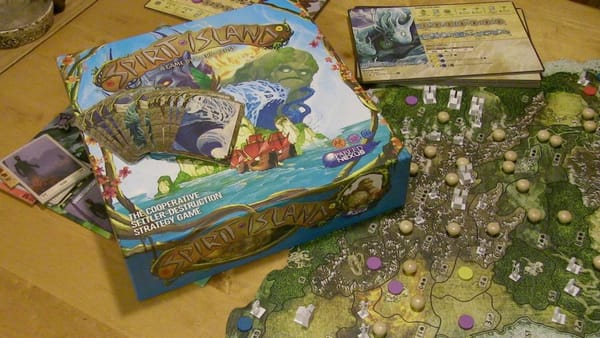
Best Cooperative Board Games (2026): 5 Picks for Every Group
From Pandemic (the classic gateway) to Spirit Island (the strategic deep-end), the best cooperative board games for every group in 2026.
If you want the best cooperative board games to play with friends or family in 2026, you've landed in the right spot. Co-op games are genuinely one of the best things to happen to tabletop gaming in the last two decades - everyone plays against the game instead of each other, which means no sore losers, no kingmaking, and no one feels ganged up on. They're also weirdly good at teaching people how to work together under pressure, which is either a fun side effect or the whole point depending on who you're playing with.
The category has exploded. There are now hundreds of co-op games across every theme, complexity level, and player count. Some are simple enough for a first-time gamer, others will consume your entire group for a 100-hour campaign. I've focused on the games I'd actually recommend to a real person - not just whatever's topping BoardGameGeek this week.
Here are five cooperative board games for different groups and different moods, from the classic gateway game that introduced most people to the genre to a deep strategic experience that will keep your game nights busy for months.
Our Top Picks
Pandemic - Best cooperative board game for beginners
Pandemic is the gateway co-op. It's the game that introduced an entire generation of players to cooperative board gaming, and in 2026 it's still one of the first games I'd hand someone who has never played a co-op before. The premise is immediately understandable: you're a team of disease specialists trying to stop four deadly diseases from spreading across the globe before they wipe out humanity. The board is a map of the world. The tension is real.
What makes Pandemic work as a first co-op is how naturally it teaches you to think as a team. Each player has a different role with a unique ability - the Medic can clear diseases faster, the Scientist needs fewer cards to find a cure, the Researcher can share cards more easily. You have to talk, plan, and divide responsibilities or you lose. The game paces the mounting threat beautifully: cities get cubes added to them each turn, and when a city that already has three cubes gets another, it outbreaks and spreads to adjacent cities. Watching a single outbreak chain across half the board is both devastating and thrilling.
Streamlined Gaming calls it "my pick for best cooperative board game," and after 15 years on the market it still earns that title as an entry point. Games take 45-60 minutes, accommodate 2-4 players, and the four difficulty levels mean it scales well as your group improves. For a gift that will actually get played, it's hard to beat at this price.
Downsides: Experienced players sometimes feel like the optimal moves are too obvious, reducing it to a logic puzzle. The "alpha player" problem - where one experienced player essentially tells everyone what to do - can undermine the cooperative experience if your group has very unequal skill levels. The theme, while compelling, feels uncomfortably close to real-world events for some players. Veterans will want to move on to Pandemic Legacy or a heavier game fairly quickly.
First-time co-op players, family game nights with older kids (10+), and anyone who wants to introduce non-gamers to the genre. Pandemic is the handshake that brings people into cooperative gaming - most people who try it want to play again immediately.
Gloomhaven: Jaws of the Lion - Best cooperative board game for committed groups
Gloomhaven: Jaws of the Lion is the more accessible entry point into the Gloomhaven universe - and by "more accessible" I mean compared to a game that requires its own filing cabinet to organize. Jaws of the Lion is a self-contained campaign dungeon crawler for 1-4 players where you build characters, fight tactical battles, and advance through a persistent story across 25 scenarios.
The card system is what makes Gloomhaven genius. Your character's hand of cards simultaneously represents your actions, your initiative, and your stamina. Every turn, you play two cards face-down and reveal them - the top half of one card is your action, the bottom half of the other is your movement. When you run out of cards, you're exhausted and the scenario is over for you. You're constantly making micro-decisions about when to use strong abilities versus preserving your hand for later.
Meeple Shelter gives Jaws of the Lion a top-5 spot among all cooperative games, and Coopgestalt lists it among the essential co-ops. What separates it from Pandemic is depth and investment: this isn't a pick-up-and-play game, it's a campaign your group commits to. If you have a regular game group that can play every week or two, Jaws of the Lion will give you dozens of hours of excellent gaming. The "Jaws" version specifically fixed the original's main criticism - setup time and space requirements - by streamlining everything into a more manageable package.
Downsides: Requires a committed group - it's designed as a campaign, so dropping in and out kills the continuity. Setup and rules take 30+ minutes the first session. The dungeon-crawler theme and fantasy setting won't appeal to everyone. Expect 2-3 hours per session once you know what you're doing.
Groups who want a "season" of gaming - something to look forward to every week or two that has story progression, character development, and increasing complexity. Think of it less as a board game and more as a tabletop RPG-light that you can actually finish.
Spirit Island - Best cooperative board game for strategic depth
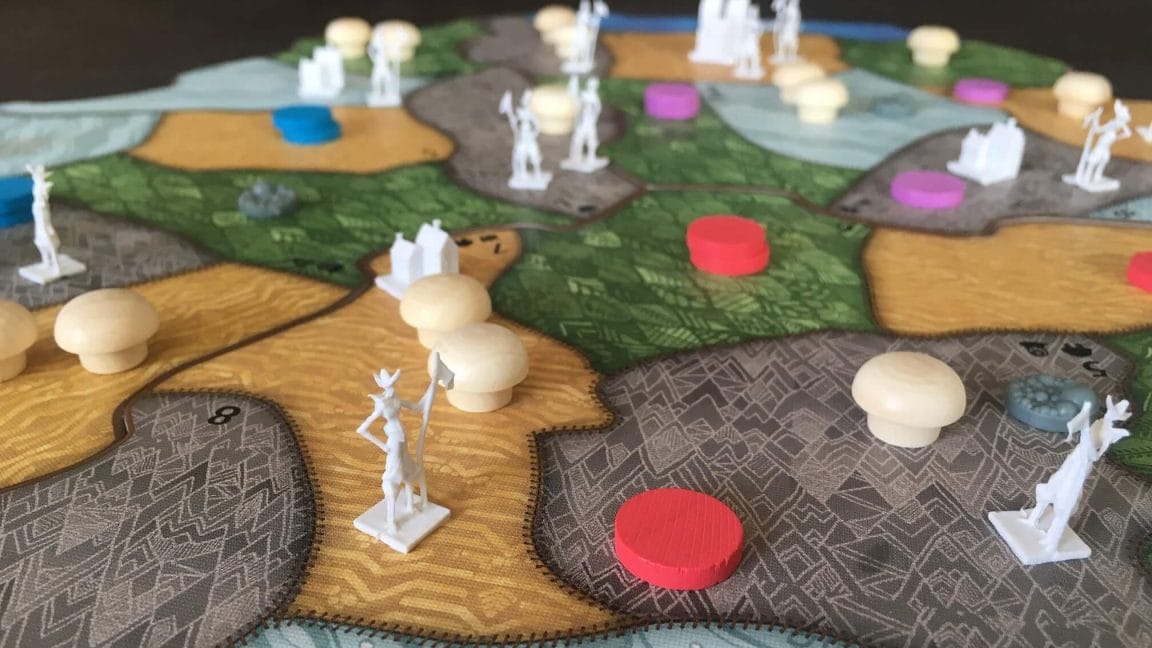
Spirit Island is one of the most acclaimed cooperative board games ever made - it sits in the top 3 on BoardGameGeek's cooperative rankings and consistently appears on "best of" lists from Meeple Shelter, Coopgestalt, and nearly every serious reviewer who covers the genre. You play as ancient spirits defending an island against colonizing invaders, which is a genuinely clever thematic inversion of the "civilizing" narrative common in conquest games.
Each player controls a different spirit with wildly asymmetric powers and a unique card deck. Lightning's Swift Strike plays completely differently from Ocean's Hungry Grasp or Vital Strength of the Earth. You're not just picking different stats - you're playing fundamentally different strategies that need to complement your teammates' spirits to win. This is what makes Spirit Island so replayable and so deep: the synergy space between spirits is enormous, and you'll keep discovering new combinations across dozens of plays.
What makes it less approachable is also what makes it great: it's genuinely complex, with a two-hour learning curve for the first game and a rulebook that requires real study. But Meeple Shelter and the BoardGameGeek community consistently note that the investment pays off - once you know the rules, the game flows smoothly and the tactical decisions are deeply satisfying. If your group wants a game that will challenge you for years and never feel solved, Spirit Island is that game.
Downsides: The first game is rough - expect 3+ hours and some confusion even with experienced rules-readers in the group. The rulebook is genuinely daunting. Not appropriate for casual players or mixed groups where some people are gamers and some aren't. Can run 2-3 hours even when everyone knows the rules.
Groups of experienced gamers who want a meaty, replayable co-op they can sink hundreds of hours into. If your group has outgrown Pandemic and wants something that will challenge you for years without ever feeling repetitive, Spirit Island is the answer.
The Crew: Mission Deep Sea - Best cooperative card game for casual groups
The Crew: Mission Deep Sea is a remarkable achievement: it takes trick-taking - the card game mechanic your grandparents played in Bridge and Spades - and turns it into a cooperative experience with 60+ progressive missions. It's the best bang-for-your-buck cooperative game on this list, takes up less space than a paperback book, and teaches in about 5 minutes.
The basic mechanic is that you and your teammates need to win specific tricks (or avoid winning certain tricks) without being able to directly communicate about your hands. You can give one limited clue per round, but mostly you have to infer what your teammates hold from context and bidding. As you progress through the 60 missions, new constraints layer on - radio silence missions where you can't communicate at all, distress signal missions with special rules - gradually increasing the complexity without ever overwhelming.
Meeple Shelter ranks it in their top 5 cooperative games overall, and Coopgestalt calls it essential. For a game that fits in a small box and costs under $20, that's extraordinary. It's also the rare co-op that works perfectly for exactly two players (Codenames Duet is the main competition), which makes it a genuinely useful couples' or duo game. If you're building a gift guide or looking for something that travels, this is the one to add. Speaking of gifts, our travel accessories picks pair well if you're outfitting someone for a trip.
Downsides: If you hate trick-taking games, no co-op wrapper will save you - the core mechanic is still trick-taking. The progressive mission structure means later missions can be frustratingly hard if you're not comfortable with the base rules. At 2-5 players, it doesn't scale as wide as Pandemic.
Casual players, couples, and anyone who wants a highly portable, quick co-op that's cheap enough to give as a casual gift. One of the few cooperative games that's genuinely excellent with just two people.
Forbidden Island - Best budget cooperative board game for families
Forbidden Island is Pandemic's younger sibling - designed by the same creator (Matt Leacock), using similar mechanics, but faster, simpler, and cheaper. You're a team of adventurers on a sinking island, racing to collect four sacred treasures and escape to the helicopter before the whole island goes underwater. Games take 30-45 minutes and the rules click within 10 minutes of setup.
What makes it work as a family game is the accessible tension. You watch tiles flip face-down as they sink, you scramble to prop up the ones you need, and you feel genuinely like a team making high-stakes decisions - even at age 8. Tabletop Bellhop notes that it's one of the few co-ops that works with fully open hands for younger kids, meaning parents can coach without it feeling patronizing. The tin it comes in is charming and makes it a great-looking gift.
The difficulty scaling system (beginner through legendary) means it grows with your family and doesn't get boring once everyone's figured it out. If you're buying for a family with mixed ages or someone who is new to hobby board gaming, Forbidden Island is the most accessible and price-friendly entry point on this list. It's also a great first purchase if you want to find out whether your group enjoys co-ops before investing in something like Spirit Island.
Downsides: Experienced gamers will find it too light after a handful of plays. The "alpha player" problem exists here too, though it's less severe than Pandemic since games are shorter and lower-stakes. Somewhat luck-dependent - bad flood deck draws can put you in impossible situations before you have a chance to react.
Families with kids ages 8 and up, gift-givers looking for something under $20, and anyone testing the co-op waters before committing to a bigger game. Also the most packable co-op here - the tin literally fits in a backpack.
Byteblip
New Products, Gift Guides, The Best Deals